14.18¡ÆC
Rapid flow of ideas and goods is a dominant feature of the present age of hyper-globalization. The spurt of information technology has facilitated the global economy, thereby making everyone a global producer, trader and consumer. Goods produced in a corner of the world gets quick marketing across the globe.
Gradual easing of national laws on export and import are equally instrumental in spurring economic connectivity. The capitalist mode of economy gives boost to the availability and choices for foreign products. However, those unable to produce goods at scale and market beyond border are bound to suffer. Rather, increasing dependency on imported items becomes both compulsion and fashion. Nepal is not an exception to this.
The government from time to time issue directive that urges the public agencies and people to promote the goods produced inside the country so that it would help curb unnecessary imports. If one gives a close observation, Nepali market is eyesore with the foreign products. From the garments to fruits, food grains to vegetables, the city dwellers hugely depend on imports.
In this regard, the Office of the Prime Minister and Council of Ministers (OPMCM) recently issued a circular to all government offices to promote the use of locally/nationally produced goods. The notice reminded the public agencies to prioritize Nepali products in the procurement and use so that home-grown products could be promoted, local skills and enterprises protected and employments generated.
It is true once we prioritize domestic products, it helps substitute imports. As per the OPMCM’s decision, the government bodies should use Nepali handicrafts as much as possible for office purposes, meetings, ceremonies, as gifts and decorations items. The circular is indeed a welcome decision, for it has reminded the public bodies again that they stopped prioritizing imports.
The circular to the public bodies is also related to the purchase. When the procurement of nationally produced items are encouraged, it evidently helps create atmosphere for production and marketing across the country.
Local tastes
Compared to the past, Nepal has better transport. The expanded road networks have helped transporting goods to cities. The things produced in distant villages/districts can be worth consumption in the cities. Though little, the taste of ‘local’ is gradually gaining ground in Kathmandu city. The avocados produced in eastern hilly region are getting market in Kathmandu.
The Karnali marsi rice, apple and legumes are also found in the stores even around Singh Durbar. The bamboo shoots from the areas around Pokhara are also ferried to the federal capital. The goats reared in hilly regions are brought to the valley throughout the year. During the Dashain and Tihar festivals, the supply of Himayalan goats (Chyangra) to Kathmandu is normal for years. If there is sustainable management and supply system, the healthy Himalayan goats can be tasty consumption for city dwellers for round the year.
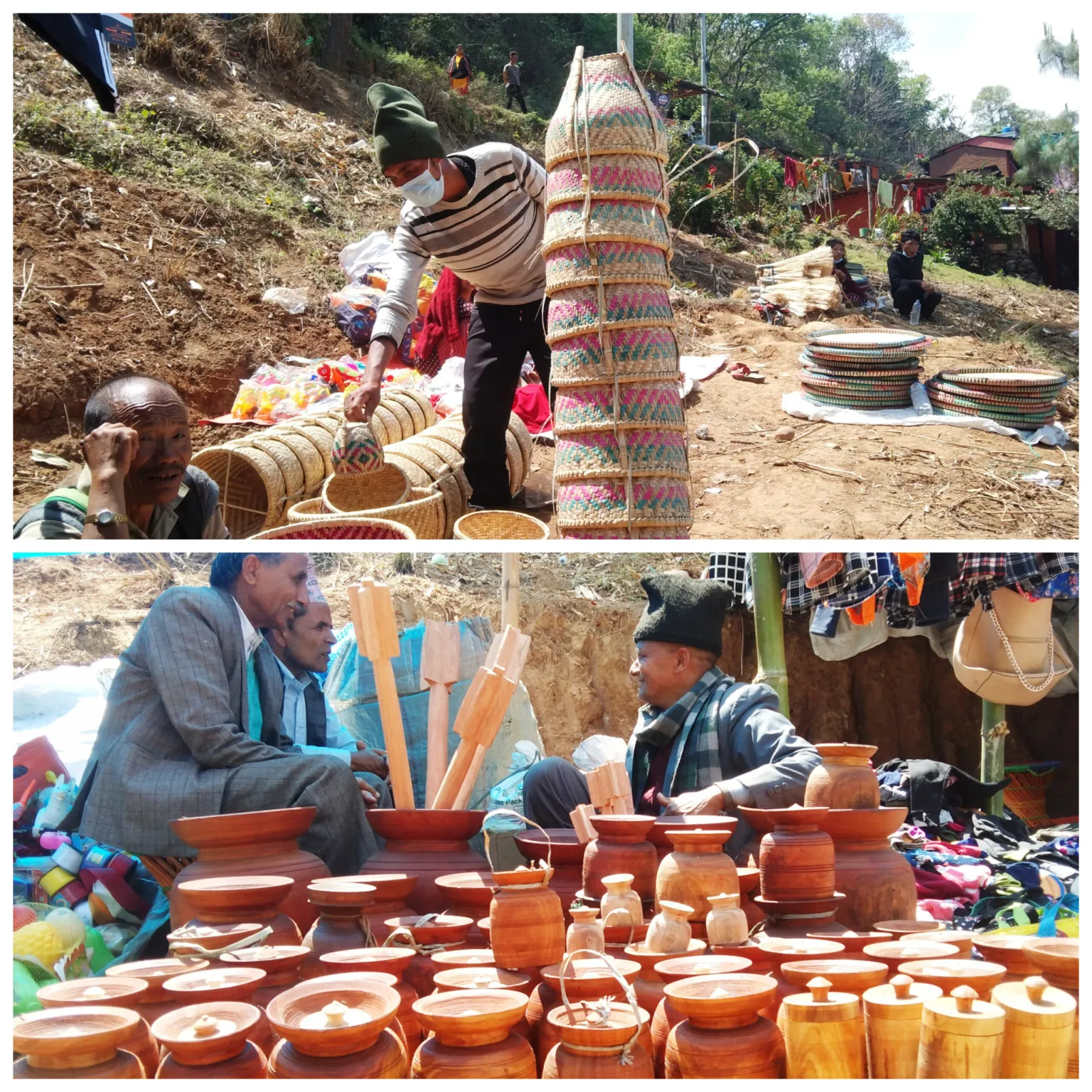
Irrespective of these few things, many locally/nationally produced things are desperately awaiting boost. As stated in the OPMCM’s circular, the items prepared as gift with the use of indigenous products should be ensured proper market. Many people in distant villages have protected traditional skills by making unique things, which can be gift and decoration objects. For example, production of bamboo items not only help create jobs at local levels but also foster atmosphere for green and circular economy once it is given emphasis by all three tiers of government.
Instead of chasing the gimmick of gaudy plastic materials, the bamboo products can be good option. It has direct bearing on environment. Importantly, Nepal’s climate is rich and salubrious for bamboo production. Worryingly, the bamboo is left to decay for lack of use and care in many hills. So is the case of varieties of woods.
The handicraft items are major pillars of domestic and cottage industry. Those engaging in production of handicrafts should be given incentives. Handicrafts are not mere source of income but the products bearing national tradition, art and culture. Nepal’s wood carving is known to the world.
Laudable initiative
Lately, the federal government’s intervention to reopen the Hetauda Textile Industry has earned accolade. The trial production of clothes by repairing aging equipment requires rigorous efforts. However, government kept on working by mobilizing the Nepali Army. If the government paves way for the sustainable resumption of the Hetauda Textile Factory, it would be tremendous achievement.
The government’s recent circular should not be limited to public bodies but also expanded to people’s level. As a major actor of national affairs, government agencies can facilitate atmosphere while people can rethink their consumption practice. Togetherness fosters a campaign. Once the demand of locally produced goods is raised, the government agencies get pressure to pay heed. It is high time we Nepalis reconsidered consumption habit and pattern. The production and supply of the local/national goods beyond seasonal and occasional taste or gimmick/fashion helps government’s drive foster promotion of nationally produced items and gradually reduce the imports. At the same time, quality control is always imperative.
-Narayan Prasad Ghimire